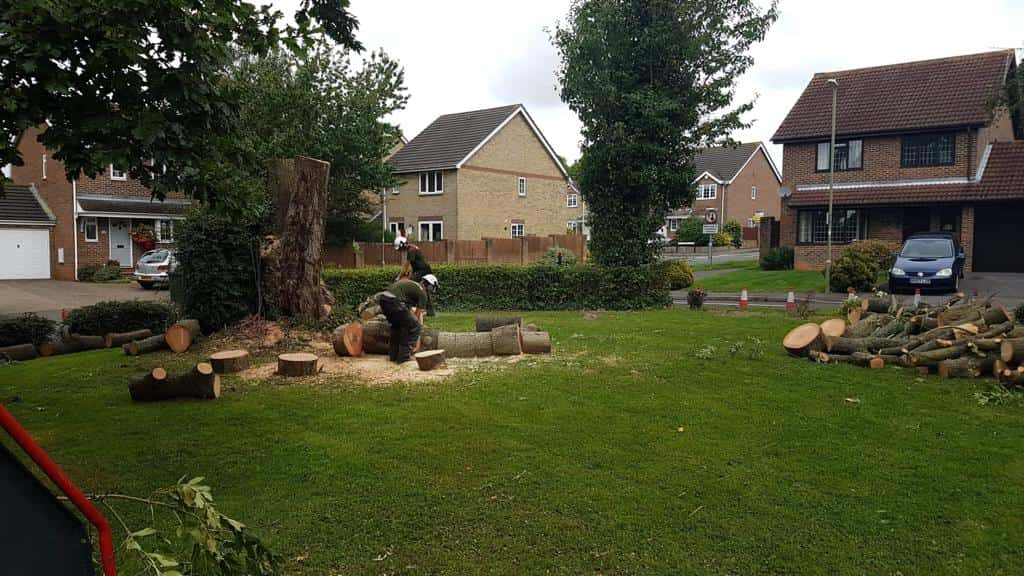
Removing a tree can create valuable new space within a garden, but the remaining stump can quickly become an obstacle when landscaping work begins. Although it may seem easier to design paths, lawns, planting areas or patios around an existing stump, doing so can unnecessarily restrict how the garden can be developed.
Stump grinding is often best considered before the main landscaping work starts. By reducing the stump below ground level and dealing with the immediate obstruction at an early stage, the surrounding area can be planned more freely and prepared according to its future purpose.
For homeowners in Woodford, Essex, arranging stump grinding as part of the early preparation for a garden improvement project can make subsequent landscaping considerably more straightforward.
Why Should Stump Grinding Be Completed Before Landscaping Work Begins?
Landscaping relies on establishing suitable levels, preparing the ground and creating a logical layout. An old tree stump can interfere with each of these stages.
Removing the obstruction first allows the landscaper to work with the available space rather than designing around something that may eventually need to be removed anyway.
The importance of early stump grinding becomes particularly clear when the affected area is intended for a lawn, path, planting bed or another carefully prepared garden feature.
A Tree Stump Can Restrict the Garden Layout
Even a relatively small stump can occupy more useful space than initially expected.
The visible section may prevent a path from following the most convenient route, interrupt a lawn or force a planting area into an awkward shape. Larger stumps can have an even greater influence on the overall garden design.
If the stump is going to be removed eventually, designing permanent landscaping around it can create unnecessary compromises.
Grinding it before the layout is finalised allows the garden to be planned around how the homeowner actually wants to use the space.
Landscaping Is Easier When the Main Obstructions Are Removed First
Successful landscaping generally involves completing work in a logical sequence.
Major obstructions should ideally be dealt with before finished surfaces and carefully prepared areas are created around them. A stump that remains in position can make excavation, levelling and access more difficult.
Removing it afterwards may also mean working close to newly completed landscaping.
Completing stump grinding first creates a clearer working area and allows subsequent preparation to progress without having to protect finished features immediately surrounding an unwanted stump.
Stump Grinding Can Make Ground Preparation More Practical
Many landscaping projects require the ground to be prepared to particular depths and levels.
An existing stump can interfere with this process because the surrounding ground cannot simply be treated as one continuous area. Equipment may need to work around it, and the intended levels may have to be adjusted unnecessarily.
Grinding the stump below the surrounding ground level removes much of this restriction.
The area can then be assessed according to what will replace the stump rather than being permanently shaped around its current position.
It Can Create More Usable Lawn Space
Tree stumps are particularly inconvenient when homeowners want to establish or improve a lawn.
Grass may grow around the stump, but the area remains interrupted. Mowing becomes more awkward, and the stump can prevent the lawn from developing as one continuous usable surface.
If the long-term intention is to create open grassed space, stump grinding before lawn preparation is generally the more logical sequence.
Once the stump has been dealt with, the affected area can be prepared appropriately as part of the wider lawn rather than remaining as an obstacle within it.
Paths Can Follow More Natural Routes
Garden paths should normally follow routes that make movement through the garden straightforward.
A stump positioned along the most useful route can force a pathway to curve around it or become narrower in one section. While curved paths can be attractive when deliberately designed, changing a route solely to avoid an unwanted stump may compromise the layout.
Grinding the stump first gives greater flexibility.
The pathway can then be positioned according to access, garden proportions and surrounding features rather than the location of a tree that is no longer present.
Stumps Can Interfere With New Planting Areas
Removing one tree can create an opportunity to rethink the planting around that section of the garden.
However, a remaining stump occupies ground that might otherwise become part of a new bed or border. Its position can also make cultivation and preparation around the immediate area more difficult.
Stump grinding can provide greater freedom when reorganising planting.
The resulting area still needs to be assessed and prepared appropriately for its intended use, but the main woody obstruction no longer dictates the shape of the new landscaping.
Future Patio and Hard Landscaping Plans Should Be Considered Early
If the area around a former tree is eventually intended for hard landscaping, the stump should be considered during the planning stage rather than after construction begins.
Patios and other prepared surfaces depend on suitable groundwork and consistent supporting construction. Leaving an unwanted stump within the proposed area can complicate excavation and preparation.
Grinding before the main landscaping work allows the site to be considered more clearly.
The subsequent ground preparation can then be determined according to the requirements of the new surface rather than attempting to incorporate the old stump into the design.
Removing a Stump Later Can Disrupt Completed Landscaping
The timing of stump grinding matters because access is generally easier before a garden has been fully landscaped.
If a stump is left until later, reaching it may involve working close to new lawns, paths, borders or other finished areas. The space available for equipment may also have become more restricted.
Planning stump grinding at the beginning reduces this difficulty.
It allows the work to take place while the garden is still in its preparation stage, before surrounding areas have received their final finish.
Grinding Is Different From Leaving the Stump to Decay
Some homeowners consider leaving an old stump in place and allowing it to deteriorate naturally.
Although timber will change over time, natural decay does not necessarily match the timetable of a landscaping project. The stump can continue occupying useful space while the rest of the garden is ready for improvement.
Where a new layout is being planned now, waiting for gradual deterioration may therefore be impractical.
Stump grinding provides a controlled way of reducing the obstruction so that landscaping can proceed without depending on an uncertain natural process.
Stump Grinding Is Not the Same as Excavating the Entire Root System
It is useful to understand what stump grinding is intended to achieve.
The process uses specialist equipment to reduce the main stump and accessible material to below the surrounding surface. It does not normally involve excavating every root extending through the garden.
This distinction matters when planning what happens afterwards.
The future use of the area should be considered so that the appropriate grinding depth and subsequent ground preparation can be discussed before landscaping begins.
The Intended Use of the Area Influences the Work
Not every stump needs to be approached in exactly the same way.
A stump located in an area intended to become part of a lawn presents different considerations from one positioned where substantial landscaping changes are planned.
Before grinding begins, it is helpful to understand what the homeowner intends to do with the space.
This allows the stump work to form part of the wider garden preparation rather than being treated as an unrelated task.
Multiple Stumps Can Significantly Limit a Garden
The effect becomes even more noticeable where several trees have previously been removed.
Individual stumps may divide the lawn, interrupt access routes and make larger sections of the garden difficult to incorporate into a new design. Planning around all of them can leave the finished landscaping unnecessarily fragmented.
Grinding several unwanted stumps before landscaping can change how the entire garden is viewed.
Areas that previously seemed awkward may become suitable for continuous lawns, broader planting schemes or more practical routes through the garden.
Stump Grinding Can Help Simplify Garden Maintenance
An unwanted stump can remain inconvenient even when no major landscaping feature is planned directly over it.
Grass and unwanted vegetation can grow around the base, while mowing and general maintenance require extra attention. The area may gradually become one of those sections of the garden that is repeatedly worked around rather than properly incorporated.
Removing the obstruction allows the surrounding landscape to be managed more consistently.
For homeowners redesigning a garden partly to make it easier to maintain, dealing with old stumps at the beginning can therefore be particularly worthwhile.
The Stump May Be Larger Than It Appears
The visible portion of a stump does not always indicate the extent of the material immediately below ground level.
A stump that appears relatively small from above can have a substantial base beneath the surrounding soil. This can become apparent only when preparation for landscaping starts.
Assessing the stump before other work begins helps avoid unexpected complications later.
Professional stump grinding equipment can then be selected and the area approached according to the actual size and position of the stump.
Access Should Be Considered Before the Garden Changes
Stump grinding requires suitable access to the working area.
Before landscaping, routes through the garden may be relatively open. Once new features, planting and finished surfaces have been installed, access to the same stump could become more complicated.
Considering access early can therefore influence the order in which the wider project is completed.
Where stump removal is already part of the long-term plan, arranging it before access becomes restricted is generally more practical.
Can You Landscape Around an Existing Stump?
It is certainly possible to incorporate some stumps into garden designs, particularly when keeping them is a deliberate choice.
The situation is different when the stump is unwanted and likely to be removed eventually.
Creating permanent landscaping around an obstruction that has no long-term role in the garden can mean accepting unnecessary limitations. If removal is already planned, completing it first generally gives greater freedom over the finished design.
The decision should therefore be based on whether the stump genuinely contributes to the intended garden or simply remains because it has not yet been dealt with.
Why Professional Stump Grinding Makes a Difference
Stump grinding involves powerful specialist machinery working close to ground level and often within established gardens.
The stump needs to be assessed for its size, position, accessibility and relationship with surrounding features. The intended use of the area afterwards is also relevant because this can influence how the work should be approached.
At Woodford Tree Surgeons, we consider stump grinding in Woodford, Essex, as part of preparing an area for its next use. Where landscaping is planned, understanding the proposed garden layout can help ensure the stump is dealt with at the most appropriate stage of the project.
Plan Tree and Landscaping Work in the Right Order
Garden improvements are generally more straightforward when disruptive preparation is completed before finishing work.
Where trees have already been removed, dealing with remaining stumps before installing new lawns, paths, planting areas or other landscaping can prevent unnecessary complications.
This does not mean every stump needs to be removed simply because landscaping is taking place.
However, if an unwanted stump occupies an area that forms part of the new design, addressing it early allows subsequent work to proceed with fewer restrictions.
Conclusion
Stump grinding should often come before landscaping because an unwanted stump can interfere with ground preparation, garden levels, lawn areas, planting and the positioning of paths or other features. Removing the obstruction at the preparation stage also reduces the likelihood of having to work around completed landscaping later.
The best approach is to consider what the area will eventually become. This allows the stump grinding and subsequent ground preparation to support the wider garden plan rather than treating each stage independently.
If you have an unwanted tree stump and are planning landscaping at your property in Woodford, Essex, Woodford Tree Surgeons can assess the stump and determine an appropriate grinding approach. Contact our team to discuss professional stump grinding before your garden improvements begin.
Call us on: 020 3917 4991
Click here to find out more about Woodford Tree Surgeons
Click here to complete our contact form and see how we can help with your tree care needs.