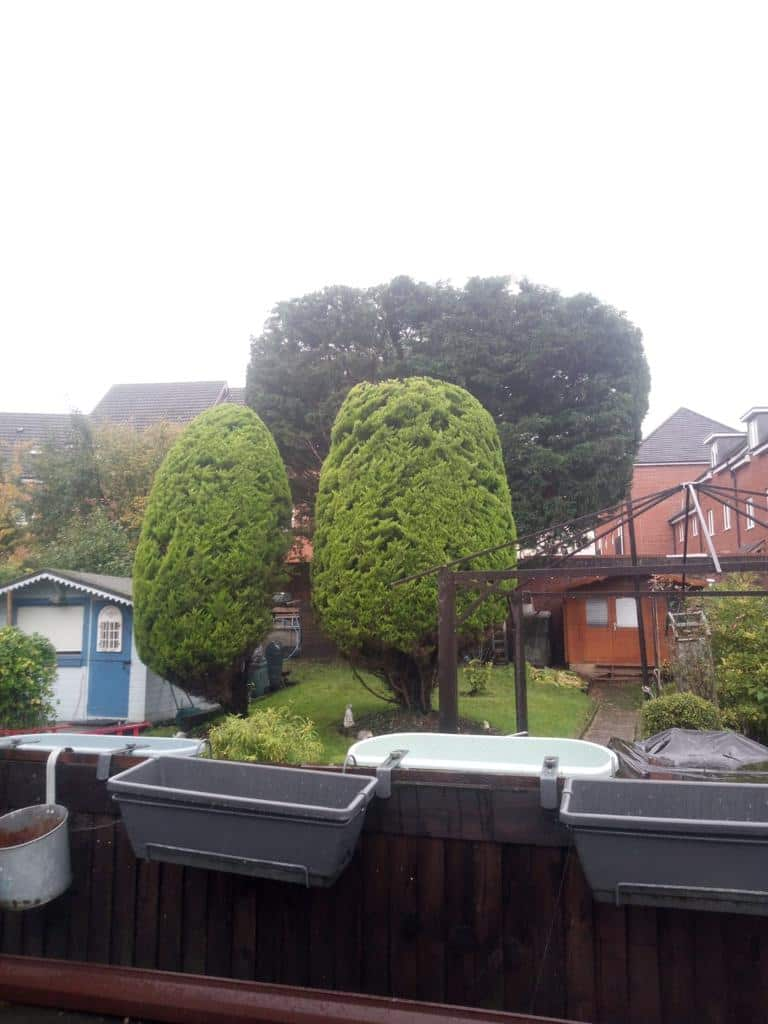
An overgrown tree can dominate a garden, restrict natural light and extend towards buildings, paths or neighbouring features. However, excessive growth does not automatically mean that the tree needs to be removed. Several professional tree surgery techniques can make it more manageable while retaining its appearance and value.
For property owners in Woodford, Essex, the correct solution depends on the tree’s species, health, structure and position. A professional assessment can identify the underlying problem and determine how much work is appropriate.
Choosing the Right Tree Surgery for an Overgrown Tree
Tree surgery should have a clear purpose. Cutting branches indiscriminately can leave the crown unbalanced, encourage weak regrowth and create unnecessary wounds. The aim may instead be to reduce the tree’s overall size, increase clearance, remove unsafe growth or improve the structure of its crown.
Crown Reduction
Crown reduction decreases the height or spread of a tree by shortening selected branches. Cuts are made back to suitable growth points so that the crown retains a balanced, natural outline.
This method may be appropriate when a tree has become too large for its surroundings, branches are approaching a building or heavy limbs are placing strain on weak unions. It can also reduce the leverage exerted by long branches during windy conditions.
The amount removed must be carefully judged. Excessive reduction can stress the tree and stimulate dense, weakly attached regrowth.
Crown Thinning
Crown thinning involves selectively removing smaller branches from throughout the canopy without substantially altering its overall size or shape. This creates a more open structure and allows additional light and air to pass through the crown.
It can be useful when dense foliage makes a garden feel enclosed or when branches are rubbing and crossing. Thinning must be distributed evenly, as removing too much material from one area could affect the crown’s balance.
Crown Lifting
When low branches obstruct paths, lawns, entrances or seating areas, crown lifting may provide the necessary clearance. This involves removing or shortening carefully selected branches from the lower part of the canopy.
Crown lifting can make a garden easier to use and maintain without significantly reducing the upper crown. Care is required to avoid removing too many lower branches or creating large wounds close to the main stem.
Selective Pruning
An overgrown tree may not require extensive crown work. Selective pruning can address individual branches that are growing in unsuitable directions, pressing against other limbs or extending towards structures.
This targeted approach retains as much healthy growth as possible. It is particularly useful when the tree is generally well formed but has developed several specific areas of concern.
Dead Wood Removal
Dense, overgrown crowns can conceal dead, damaged or declining branches. These limbs no longer benefit the tree and may become increasingly brittle.
Dead wood removal focuses on eliminating affected branches while leaving sound growth intact. It can reduce the risk of falling material and make the remaining structure easier to inspect.
Managing an Unbalanced Crown
Trees sometimes develop heavier growth on one side because they are reaching towards available light or responding to previous pruning. An uneven crown can place disproportionate strain on major branches and the main stem.
Corrective pruning or a carefully planned crown reduction may restore a better distribution of weight. This work must respect the tree’s natural growth pattern rather than attempting to create artificial symmetry.
Pollarding
Pollarding is a specialised management method in which branches are cut back to established points and then maintained through repeated pruning. It is suitable only for certain species and situations.
It should not be confused with severely cutting back a mature tree that has never previously been pollarded. Beginning an unsuitable pollarding regime can cause stress, decay and weak regrowth, so professional assessment is essential.
Tree Felling
Felling may be considered when an overgrown tree is structurally unsound, severely declining or fundamentally unsuitable for its location. It may also be appropriate where other forms of tree surgery would not provide a dependable outcome.
Removal is generally considered after the condition of the tree and the practical alternatives have been assessed. Where access is restricted, the tree may need to be dismantled in controlled sections.
Why Professional Assessment Matters
Different tree surgery methods produce very different results. The most suitable choice depends on factors including:
- the reason the tree has become problematic
- the species and its response to pruning
- the condition of the trunk and main branches
- the location of buildings and garden features
- the amount of healthy growth that can safely be removed
- the tree’s long-term maintenance requirements
A professional tree surgeon can examine these factors and recommend proportionate work that addresses the problem without removing more growth than necessary.
Conclusion
Overgrown trees can often be managed through crown reduction, thinning, lifting, selective pruning or dead wood removal. Pollarding is suitable only in particular circumstances, while felling may be appropriate when the tree cannot be managed reliably through pruning.
If an overgrown tree is affecting your garden or property in Woodford, Essex, Woodford Tree Surgeons can assess its condition and explain the most suitable options. Contact the team to arrange a professional evaluation and develop an appropriate tree management plan.
Call us on: 020 3917 4991
Click here to find out more about Woodford Tree Surgeons
Click here to complete our contact form and see how we can help with your tree care needs.